

One of the most common sources of confusion in the U.S. construction industry is the difference between working as a contractor and working as a subcontractor. Many people start working without clearly understanding which category they fall into, what permits they need, or what legal responsibilities they are taking on.
The problem is that this confusion can lead to fines, lost contracts, or serious limitations on business growth.
Understanding the difference between a contractor license and working as a subcontractor is not just a legal issue—it’s also a strategic decision. Each option comes with different advantages, limits, and obligations. Choosing the right path depends on your goals, experience, the type of work you want to do, and how you plan to grow in 2026.
In this article, we clearly explain what each role means, when each option makes sense, and how to make an informed decision to work legally and successfully in construction in the U.S.
What Is a Contractor License?
A contractor is a person or business that works directly with the final client, manages the project, and takes full responsibility for the work.
What does a contractor license allow you to do?
- Sign contracts directly with clients
- Offer construction or remodeling services
- Manage full projects
- Hire subcontractors
- Access larger and better-paying projects
Requirements and obligations (vary by state)
- Legal business registration
- Proper state or local contractor license
- Required insurance
- Compliance with building codes and regulations
- In some cases, exams and mandatory courses
Having a contractor license gives you more control—but also more responsibility. It’s ideal for those who want to build a brand, grow, and operate independently.
At HDS Biz Solutions, we help you identify which license you need and guide you through the process correctly, avoiding common mistakes from the start.
What Is a Subcontractor?
A subcontractor is a person or business that works for a main contractor, not directly for the final client.
What does working as a subcontractor allow?
- Perform specific tasks (electrical, drywall, painting, framing, etc.)
- Work under a contractor’s license
- Focus mainly on the technical side of the job
- Reduce administrative responsibilities
Common obligations
- A contract with the main contractor
- In many cases, your own insurance
- Compliance with safety rules and building codes
- No direct contracts with the final client
Being a subcontractor can be a good option to start, gain experience, or keep a simpler business model—but it has clear limits when it comes to income and growth.
Legal Comparison: Contractor vs. Subcontractor
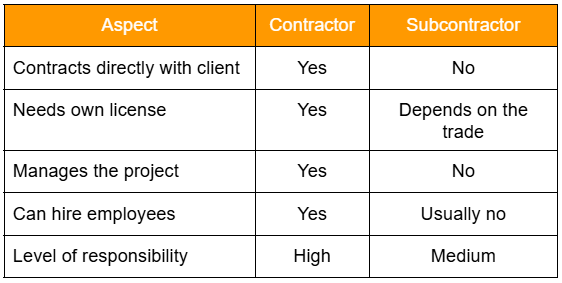
Many legal issues arise when someone acts as a contractor without a license, even if they present themselves as a subcontractor.
When Does Each Option Make Sense for Your Business Model?
Being a contractor makes sense if you:
- Want to own your own business
- Plan to grow and scale
- Want to manage full projects
- Want to build your own brand
- Are looking for more control and higher profit potential
Being a subcontractor makes sense if you:
- Are just starting in the industry
- Prefer focusing only on technical work
- Don’t want to manage clients or full projects
- Want stability with less administrative burden
Many professionals start as subcontractors and later move into becoming licensed contractors once they’re ready to grow.
Real-Life Examples
Example 1:
Juan installs drywall for different companies. He doesn’t sign contracts with final clients and gets work from licensed contractors. He operates as a subcontractor.
Example 2:
María offers full remodeling services, gives estimates directly to clients, and hires electricians and plumbers. She needs a contractor license.
Example 3:
Carlos started as a subcontractor, took courses in estimating and building codes, registered his business, and obtained his license. Today, he manages full projects.
Recommendation: Choosing the right model from the beginning helps avoid fines, conflicts, and unnecessary limits on your growth.
Conclusion: Choosing Right Today Saves You Problems Tomorrow
The difference between being a contractor or a subcontractor goes far beyond a title. It affects your legal responsibility, growth potential, and the type of business you want to build. There is no single “best” option for everyone—but there is a right option based on your current situation and goals.
Making an informed decision allows you to work with peace of mind, protect your effort, and plan your future with clarity.
Not sure which path is right for you?
At HDS Biz Solutions, we help you evaluate your situation, register your business, obtain the correct license, and train in key areas such as estimating, building codes, and blueprint reading.